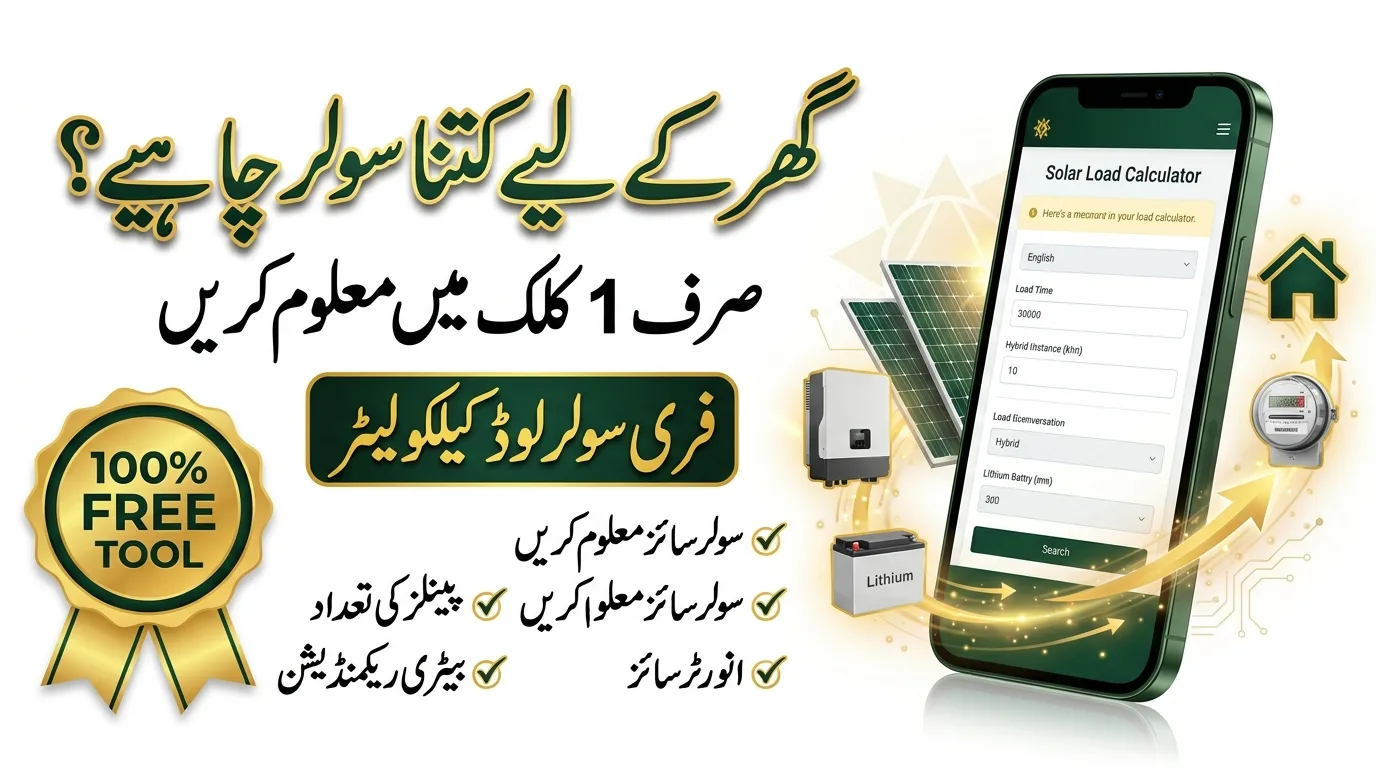
Solar Load Calculator – Find What Size Solar System You Need
Installing a solar system without calculating your electricity requirements can lead to poor performance, higher costs, and future upgrades. Before investing in solar panels, batteries, or an inverter, it is important to understand your total electrical load.
Our Solar Load Calculator helps you determine the ideal solar system size based on the appliances you use daily. Simply add your appliances, specify usage hours, and adjust solar settings to receive an instant recommendation for:
- Solar System Size (kW)
- Number of Solar Panels
- Inverter Capacity
- Battery Size
- Daily Energy Consumption
Whether you are planning a small residential solar setup or a larger commercial system, this calculator provides a practical estimate based on real-world energy usage.
What Is a Solar Load Calculator?
A Solar Load Calculator is an online tool designed to calculate the total electrical load of your appliances and estimate the solar system required to power them.
Instead of guessing how many solar panels or batteries you need, the calculator analyzes:
- Appliance wattage
- Quantity of appliances
- Daily usage hours
- Peak sunlight hours
- System efficiency
The result is a recommended solar setup tailored to your energy requirements.
Why Is Load Calculation Important?
One of the biggest mistakes people make when buying solar systems is choosing a system size based on budget instead of energy consumption.
This often causes:
- Insufficient solar production
- Frequent battery discharge
- Overloaded inverters
- Poor backup performance
- Reduced system lifespan
A proper solar load calculation ensures your system is correctly sized from the beginning.
Benefits of Using a Solar Load Calculator
- Calculate total appliance load instantly
- Determine required solar system size
- Estimate inverter capacity
- Calculate battery storage requirements
- Avoid overspending on solar equipment
- Improve system efficiency
- Plan future expansion
- Reduce electricity bills effectively
How to Use the Solar Load Calculator
The calculator is designed to be simple and user-friendly.
Step 1: Select Your Appliances
Choose the appliances you want to run on your solar system.
Common appliances include:
- Ceiling Fans
- Inverter Fans
- LED Bulbs
- LED TVs
- Refrigerators
- Laptops
- Desktop Computers
- Water Pumps
- Washing Machines
- Air Conditioners
- Microwaves
- Electric Irons
- Routers
- Mobile Chargers
You can tap multiple times to increase appliance quantity.
Step 2: Add Custom Appliances
If your appliance is not listed, use the custom appliance option.
Simply enter:
- Appliance Name
- Wattage Rating
The calculator automatically adds it to the total load.
Step 3: Set Peak Sun Hours
Peak Sun Hours represent the average amount of effective sunlight available each day.
Typical Values
| Condition | Sun Hours |
|---|---|
| Winter | 4 Hours |
| Average | 5.5 Hours |
| Sunny Day | 6 Hours |
| Summer Peak | 7 Hours |
More sunlight means fewer solar panels may be required.
Step 4: Adjust System Efficiency
Solar systems experience energy losses because of:
- Inverter conversion
- Cable losses
- Temperature effects
- Dust accumulation
Most residential systems operate between 75% and 85% overall efficiency.
The calculator allows you to adjust this value for realistic results.
Step 5: Enter Daily Usage Hours
Specify how many hours your appliances operate each day.
Examples:
- Fans: 10–16 Hours
- LED Bulbs: 5–8 Hours
- Refrigerator: 24 Hours
- Air Conditioner: 6–10 Hours
This information is used to calculate daily energy consumption.
Step 6: Generate Solar Requirement Report
Click the calculate button to receive:
- Recommended Solar System Size
- Number of Solar Panels
- Recommended Inverter
- Suggested Battery Capacity
- Daily Energy Consumption
- Appliance Load Breakdown
Understanding Your Results
The Solar Load Calculator provides several important outputs.
Total Load (Watts)
This is the combined power consumption of all selected appliances.
Example
- 4 Ceiling Fans = 300W
- 10 LED Bulbs = 200W
- Refrigerator = 150W
Total Load: 650W
This represents the maximum running load.
Daily Energy Consumption (kWh)
- Daily energy usage is calculated using:
- Energy (kWh) = Load × Usage Hours
- Example: 1000W × 8 Hours = 8 kWh Per Day
- This is one of the most important values when sizing a solar system.
Recommended Solar System Size
The calculator determines how large your solar system should be.
Example
- Daily Energy Requirement: 20 kWh
- Peak Sun Hours: 5.5
- System Efficiency: 80%
- Recommended Solar Size: Approximately 4.5–5kW
- This recommendation includes practical efficiency considerations.
Recommended Number of Solar Panels
The calculator estimates the number of solar panels needed.
- Example: 5kW System
- Using 585W Panels:
- 5000 ÷ 585 ≈ 9 Panels
- This helps simplify system planning.
Recommended Inverter Size
The inverter should be capable of handling both running and surge loads.
| Solar System | Inverter Size |
|---|---|
| 3kW | 3kW Inverter |
| 5kW | 5kW Inverter |
| 8kW | 8kW Inverter |
| 10kW | 10kW Inverter |
The calculator automatically suggests an appropriate inverter capacity.
Suggested Battery Size
- Battery storage is optional but useful for backup during load shedding.
- The calculator estimates battery capacity based on energy usage and backup requirements.
- Example: Daily Consumption: 10 kWh
- Recommended Battery: 5–10 kWh
- depending on backup duration and depth of discharge.
Common Appliance Power Consumption Table
| Appliance | Typical Wattage |
|---|---|
| Ceiling Fan | 75W |
| Inverter Fan | 30W |
| LED Bulb | 20W |
| LED TV 43″ | 80W |
| Refrigerator | 150W |
| Desktop PC | 120W |
| Laptop | 65W |
| Router | 10W |
| Mobile Charger | 15W |
| Water Pump 1HP | 350W |
| Water Pump 2HP | 750W |
| Washing Machine | 400W |
| Microwave Oven | 800W |
| Electric Iron | 1000W |
| Inverter AC 1 Ton | 900W |
| Inverter AC 1.5 Ton | 1300W |
| Non-Inverter AC 1 Ton | 1400W |
| Non-Inverter AC 1.5 Ton | 2000W |
| Geyser | 1500W |
| Electric Kettle | 1200W |
Example Solar Load Calculation
Suppose your home uses:
- 4 Ceiling Fans
- 10 LED Bulbs
- 1 Refrigerator
- 1 LED TV
- 1 Laptop
- Total Load: ≈ 645W
- Daily Usage: 10 Hours
- Daily Energy Requirement: 645 × 10 = 6.45 kWh
- Peak Sun Hours: 5.5 Hours
- System Efficiency: 80%
- Recommended Solar Size: ≈ 1.5–2kW
- Recommended Panels: 4 Panels (585W)
- Recommended Inverter: 3kW
This example demonstrates how the calculator generates recommendations.
Factors That Affect Solar System Size
Appliance Usage
Longer operating hours increase daily energy consumption.
Sunlight Availability
Areas receiving less sunlight require larger solar systems.
System Efficiency
Lower efficiency means more panels are required.
Future Expansion
Consider future appliances when sizing your solar system.
Battery Backup Requirements
More backup hours require larger battery banks.
Who Can Use This Calculator?
This Solar Load Calculator is ideal for:
- Homeowners
- Solar buyers
- Solar installers
- Electrical engineers
- Business owners
- Students
- Commercial facilities
- Industrial users
Anyone planning a solar system can benefit from accurate load calculations.
Tips for Accurate Solar Load Calculations
- Include all appliances that will run daily.
- Use realistic usage hours.
- Account for future load growth.
- Consider seasonal variations.
- Select practical system efficiency.
- Include backup requirements if using batteries.
- Verify appliance wattage ratings.
Frequently Asked Questions
What is a solar load calculation?
A solar load calculation determines the total energy required by your appliances and estimates the solar system needed to power them.
Why do I need a Solar Load Calculator?
It helps avoid buying an undersized or oversized solar system and improves overall system performance.
Can I calculate battery size using this tool?
Yes. The calculator provides an estimated battery capacity based on your energy requirements.
Does this calculator work for homes and businesses?
Yes. It can be used for residential, commercial, and small industrial applications.
How accurate are the results?
The calculator provides engineering-based estimates. Actual requirements may vary depending on weather, system quality, and usage patterns.
Can I add custom appliances?
Yes. The calculator includes a custom appliance option so you can enter any appliance and its wattage.
Final Thoughts
A Solar Load Calculator is one of the most important tools for planning a solar energy system. By calculating total appliance load, daily energy consumption, solar panel requirements, inverter size, and battery capacity, you can make informed decisions before investing in solar power.
Whether you are designing a new solar system or upgrading an existing one, this calculator helps ensure that your system is properly sized for your actual electricity needs.
Use the Solar Load Calculator above to find the ideal solar system size for your home or business and start planning your solar journey with confidence.